
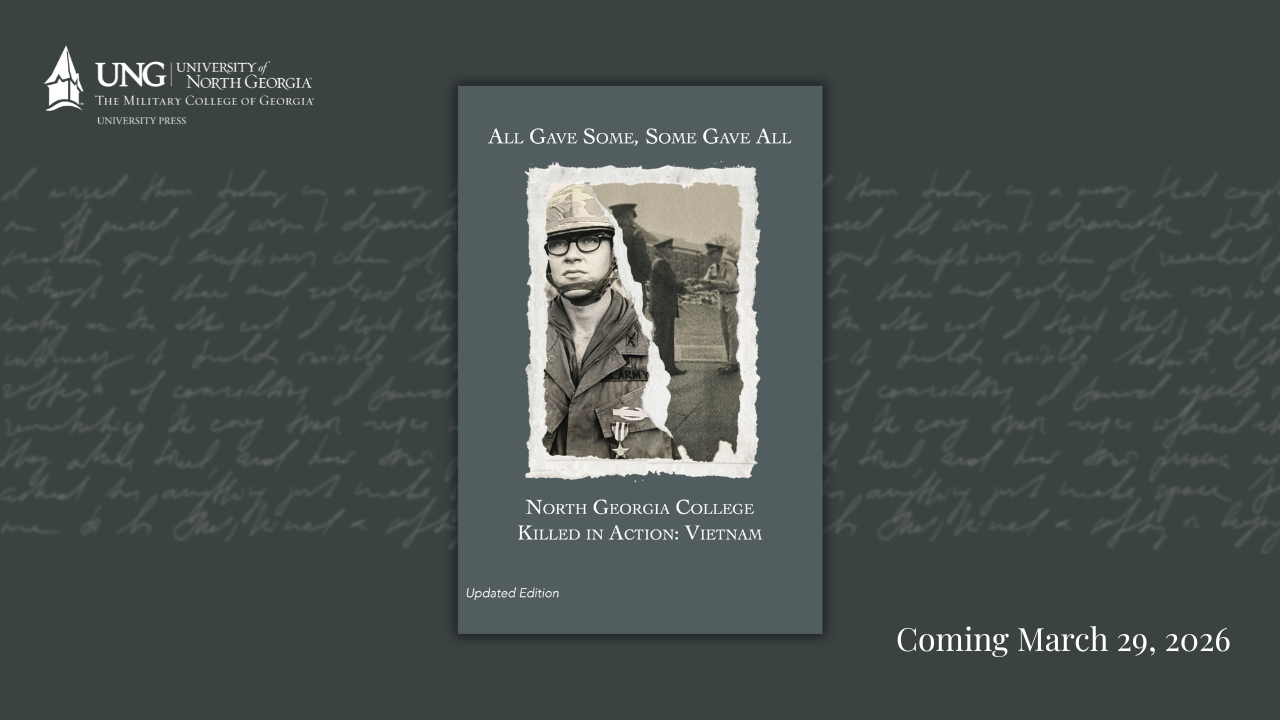
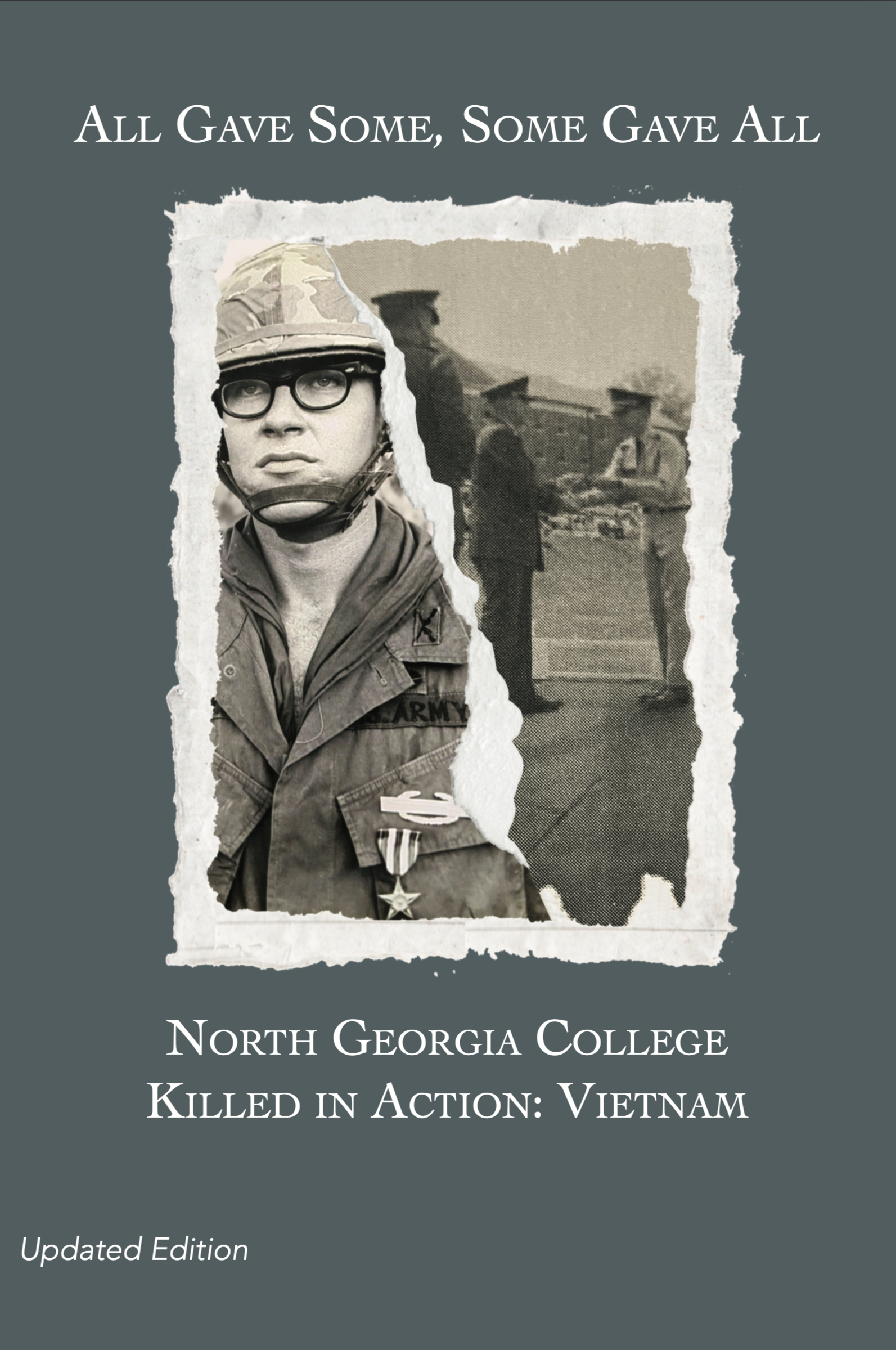
The Meaning Behind All Gave Some, Some Gave All
All Gave Some, Some Gave All shares the stories of twenty-nine men who lost their lives while serving in the Vietnam War. They fought for freedom—for the people of the United States, the people of South Vietnam, and, ultimately, for liberty everywhere. Each of these twenty-nine men attended North Georgia College (NGC), now known as the University of North Georgia (UNG), where they received excellent military training, built strong values of integrity and service, developed leadership skills, and formed lifelong friendships. Though no longer present, through their stories, their legacy lives on.
Each story is special, sharing about the person, their heroic military service, and their fate. Compiled through research and countless hours of reflection from family members, classmates, and friends, these accounts offer a deeply personal tribute.
This updated edition of All Gave Some, Some Gave All ensures that their stories remain accessible to present and future generations, preserving an essential part of UNG’s history.
Republication Date and Details
UNG Press is honored to help bring this updated edition back into circulation. This republication honors the legacy of the twenty-nine alumni who gave their lives in Vietnam and will be released on National Vietnam War Veterans Day: March 29, 2026.
To learn more or preorder your copy today, visit All Gave Some, Some Gave All in the the UNG Press Bookstore.
About the Contributors
It is thanks to the collaborative efforts of many—including family, friends, classmates, teachers—that these cadets’ stories are preserved in All Gave Some, Some Gave All. Eugene Van Sickle, Ph.D., Carl “Skip” Bell (COL, U.S. Army, Retired), Tony Falia, and Jim Ruska are credited as the book’s primary editors, and Bill Brown and Jim Solomon serve as the book’s representatives.
Bill Brown is a 1966 graduate of North Georgia College, where he earned his commission as a Second Lieutenant in the United States Army. He began his career as a Signal Corps officer with Headquarters Battery, 2nd Battalion, 10th Artillery at Fort Benning, subsequently ascending to the position of Battery Commander. In August 1967, he was deployed to Vietnam where he served as a platoon leader in the 121st Signal Battalion, 1st Infantry Division, initially stationed in Di-An before relocating to Lai Khe. In this capacity, he directed his platoon in establishing defensive positions, ensuring reliable radio communications for Division Headquarters. After six months in field operations, Bill assumed the role of 1st Division Combat Photographer Officer. He managed a platoon of combat photographers and laboratory technicians, participating in missions alongside infantry units to document military operations and collect intelligence imagery. His duties encompassed aerial photography assessments for artillery impact, support for military intelligence—including undercover assignments—and production of photographic records for official functions such as change of command ceremonies and entertainment events. During the Tet Offensive, Bill’s unit was subject to frequent mortar and rocket fire. He is appreciative for the safety of his platoon, despite enduring the loss of a fellow officer and fourteen classmates whose names are memorialized on the Vietnam Memorial Wall. Bill concluded his service in Vietnam in August 1968 and continued his reserve obligations until 1974, attaining the rank of Captain.
Jim Solomon is an accomplished leader and 1975 North Georgia College graduate. Jim’s focus today is to share with others as a leadership coach, advisor, and author. Following his leader development studies at the University of North Georgia, Jim was commissioned and advanced in his twenty-seven-year U.S. Army career to the rank of Colonel. His global responsibilities in command and senior staff positions spanned from his first assignment as the medical platoon leader, 1/327th Infantry Battalion, 101st Airborne Division (Air Assault), to other deployable combat units, complex field hospital operations, to the Pentagon. Building upon this experience, he then successfully pursued a corporate career, making a positive difference in each organization serving in leadership positions within worldwide corporations, privately owned companies, and entrepreneurial startups. As co-founder/CEO of Chambers Bay Institute, he led a team of highly select subject matter experts, who helped to develop leaders who could lead transformational change to build the future. It was there that the term “Integrator Leader” was coined and is the theme of his timeless book “Seeing What Isn’t There – A Leader’s Guide to Creating Change in a Complex World”.
Leave a Reply