
Authored by UNG Press Intern, Jocelyn Hatcher
The developmental editor has completed their edits to the manuscript; what next? In the four-stage editing process in publishing, line edits come second after developmental editing. In line editing, editors begin to focus on the linguistic content of a manuscript. It serves as the first step toward polishing the language, not by focusing solely on grammar, but on style and syntax one line at a time. Dive deeper into the specifics of the line editing stage and the benefits it gives to authors and publishers.
What does line editing look at?
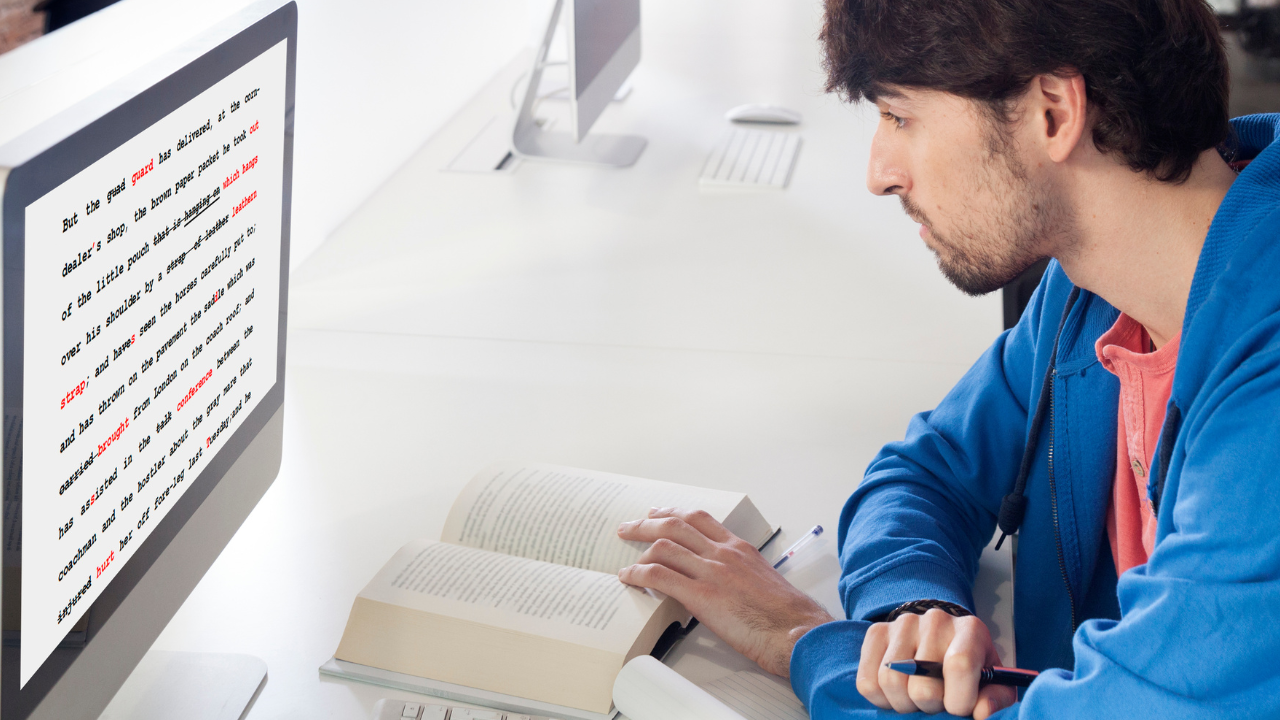
Line editing gets its name from the way editors review the manuscript. They read a manuscript line-by-line, highlighting and noting the language to make it sharp and concise (MasterClass). Line editors pay close attention to things such as clarity, repetition, style and flow, sentence structure, and readability (Cruise).
Addressing repetition is one way to improve sentence structure. Repetition can create chunky language that readers may find awkward to read. Style ensures consistency in the tone of the author’s writing across the work while also addressing grammar and formatting (Cruise). Flow consists of looking at transitions and narrative progression to assure the story moves forward smoothly (Cruise). Clarity makes sure it’s obvious to readers what the author is discussing. Readability is concerned with the reaction a reader has to the text, such as enjoying the material and navigating the text with reasonable ease. Both clarity and readability ensure the manuscript is understandable.
What makes it different from other editing stages?
Developmental editing, the first stage, is the only stage that concentrates on story details and structure. It looks at plot, characters, and pacing while noting what doesn’t work in a story and helping strengthen what does. Copyediting, the third stage, focuses on technical aspects such as grammar, punctuation, and a style guide specific to the book (Cambridge Proofreading). Proofreading, the fourth and final stage, checks for surface-level errors. It looks at grammar that might have been overlooked in past stages and any formatting errors from layout and design.
Line editing varies from the stages above due to its stylistic focus, as opposed to a structural or technical focus. A line editor wouldn’t be one to suggest moving parts of a story for plot reasons, or point out misspellings. An example of a line editor’s critique would be suggesting more detailed phrasing to replace vagueness, which could confuse readers and impact readability.
What are the benefits for the author?
Editors who do line edits pay concise attention to the small language details that reduce errors, which could impact how readers react to the book once it’s published. An author’s major benefit from line editing is improved readability and engagement. Line editing also plays a large part in the emotional tether the author creates between their book and its audience. Editors also preserve the author’s unique voice consistently throughout the book, ensuring it remains distinct from other books (Cambridge Proofreading).
How does line editing work?
MasterClass shows a good example of how line edits can improve a manuscript’s word choice. They give the example sentence: “Wiley stood out on his Montana porch watching the sunset ambiguously. The boiling orb descended under the palm-trees.” In this instance, as MasterClass explains, a line editor will pay attention to the way the sunset is described as a “boiling orb” and whether “ambiguously” is a necessary part of the sentence.
Conclusion
The overall purpose of line editing is not only to polish a manuscript’s language, but to maintain the author’s narrative voice throughout the work. It is not about changing the work into something different from the original version. It’s about improving upon the foundation that the author laid and ensuring consistency of their tone, style, and voice. This aims to achieve more positive audience engagement because of the readability provided by the line editor.
Sources:
Cambridge Proofreading. “What Is Line Editing?” Cambridge Proofreading, 25 Nov. 2024, proofreading.org/learning-center/what-is-line-editing/.
Cruise, John. “Benefits of Line Editing Services for Authors and Publishers.” World Publishing Company, 21 July 2026, worldpublishingcompany.com/benefits-of-line-editing-services/#elementor-toc__heading-anchor-6.
MasterClass. “What Is Line Editing? Line Editing Vs. Copy Editing – 2025 – MasterClass.” MasterClass, 2020, www.masterclass.com/articles/what-is-line-editing.
Leave a Reply