
Authored by Ryan Lorenz, UNG Press Intern
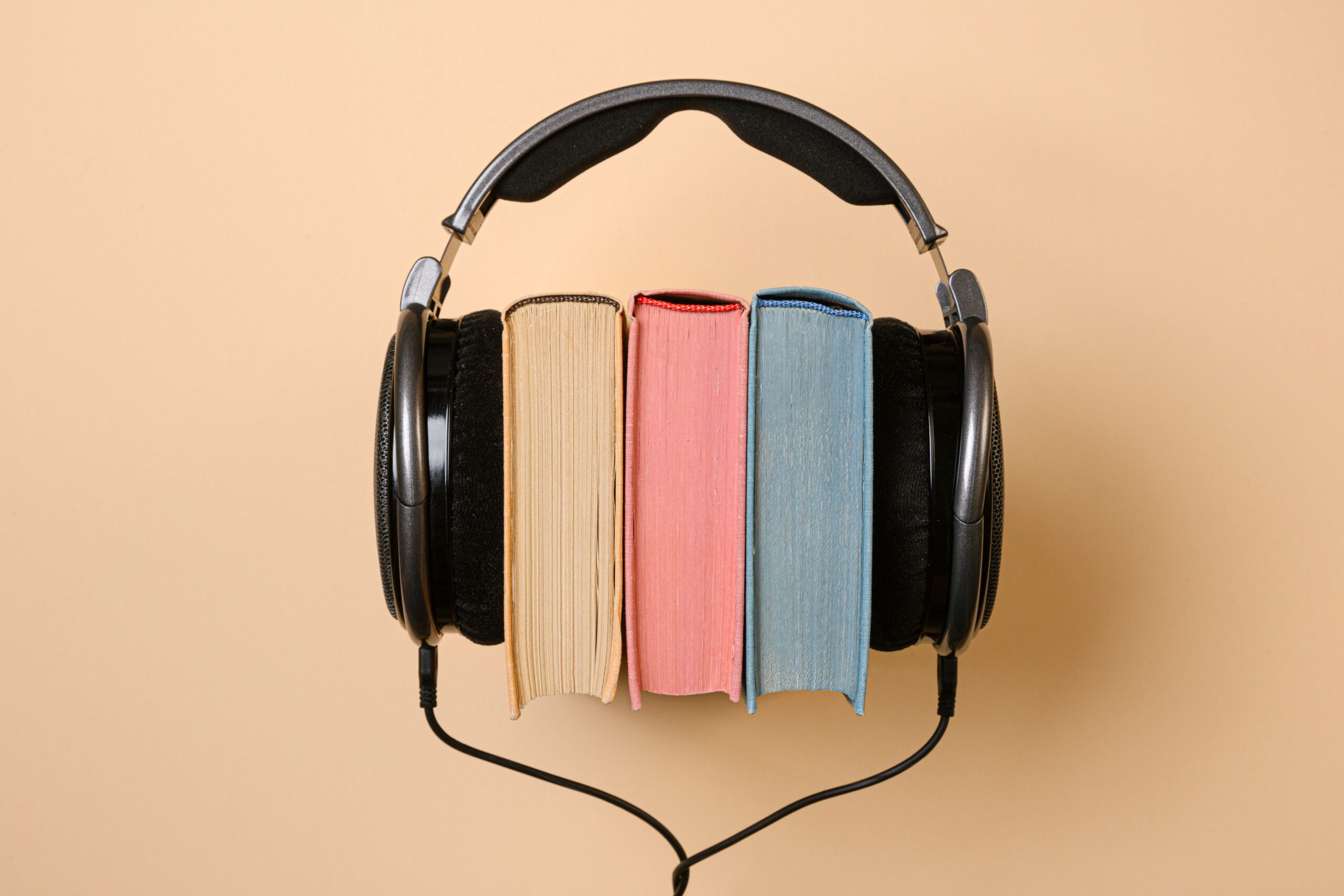
Pop in your earbuds, open an app, and within seconds you can be mid-chapter of the latest bestseller, all while commuting, cooking, painting, or folding laundry. Audiobooks feel like a thoroughly modern convenience, and yet their roots stretch back nearly a century (Thoet). What began as a lifeline for people with visual impairments has since evolved, through successive waves of technological change, into one of publishing’s fastest growing formats (Audio Publishers Association). Taking a look back at its evolution over time helps us understand not only where audiobooks came from, but how they have subtly changed the way stories and knowledge reach us today.
The Talking Book: Equity and Accessibility
The audiobook’s origin wasn’t necessarily for entertainment or convenience while multi-tasking, but instead it was all about equity. In 1931, the American Foundation for the Blind partnered up with the Library of Congress to launch the Talking Book Program, a federally funded initiative to record books on vinyl for readers who are blind or have low vision (Audio Publishers Association). The first test recordings, which were made in 1932, include a chapter from Helen Keller’s Midstream and Edgar Allan Poe’s The Raven; two works distinctly chosen for both their symbolic resonance and their content (Audio Publishers Association). By 1934, the program had expanded to Shakespear’s plays, the Bible, and the Declaration of Independence (Audio Publishers Association).
These early recordings were a genuine technological feat. Each side of a vinyl disc held only about fifteen minutes of audio, meaning a single novel could require a stack of records and quite a bit of considerable patience from the listener (Thoet). Still, the Talking Book Program demonstrated a foundational truth that still drives the audiobook industry today. It is that listening to a book is not some lesser form of reading, but a different and just as legitimate one.
Tapes, CDs, and the Rise of the General Listener
The invention of the cassette tape in 1963 was a turning point (Audio Publishers Association). Suddenly, recorded books could be portable as well as affordable (Audio Publishers Association). By the early 1970s, public libraries had begun circulating audiobooks, and by the mid-1980s, bookstores were shelving them alongside print titles rather than hiding them in separate displays (Audio Publishers Association). Major publishers started to take notice: Random House, Warner Publishing, and Simon & Schuster each opened dedicated audio divisions during this period (Thoet).
The audience was shifting too. Long car journeys became audiobook territory, and the car cassette player became an unlikely driver of industry growth (Thoet). Christopher Platt, the New York Public Library’s chief branch officer recalled a patron who once checked out an entire suitcase full of cassette tapes for an audio version of the Bible, which serves as a vivid reminder of how physically cumbersome the format still was at this time (Thoet). The transition to the CD in the late 1980s and early 1990s helped, but it was not until 1994 that the Audio Publishers Association formally standardized the term “audiobook” itself (Audio Publishers Association).
Let’s Go Digital: From Devices to Downloads
The pivotal moment in audiobook history arrived in 1997, when Audible released the first portable digital audio player designed specifically for audiobooks. At the time it cost $200 and could hold a mere two hours of audio, yet it was the first step on a path pointing unmistakably to the future. By 2003, Audible’s deal with Apple brought audiobooks to iTunes, which dramatically expanded public awareness. During this period, digital downloads surpassed CDs as the dominant format, and by 2009 the smartphone completed the revolution. The device people were carrying everywhere became their audiobook player (Audio Publishers Association).
Self-publishing entered the picture in 2011 with the launch of ACX (Audiobook Creation Exchange), and it allowed independent authors to produce and distribute their own audio titles (Audio Publishers Association). Platform diversity soon followed: Audible, Libro.fm, Hoopla, Libby, and Spotify each carved out audiences and annual audiobook publication swelled from 7,200 titles in 2011 to over 51,000 by 2016 (Audio Publishers Association; Thoet).
The Market Today and What It Means for Publishing
The numbers are difficult to ignore. The Audio Publishers Association reported eleven consecutive years of double-digit revenue growth through 2022, with 2025 audiobook sales reaching $2.43 billion (Audio Publishers Association). More than half of all Americans aged 18 and over have now listened to an audiobook (Audio Publishers Association). Those figures outpace hardcover revenues and have forced publishers to rethink their production workflows: audio rights, which were once an afterthought in contract negotiations, are now negotiated upfront, and many titles go into audio production simultaneously with print (Thoet).
For libraries and educators, the implications are significant. Platforms like Libby and Hoopla have made audiobook lending nearly as seamless as print borrowing, and accessibility advocates note that the format remains essential for listeners with dyslexia, visual impairments, and other print barriers; the same community that inspired the Talking Book Program nearly a century ago.
So, does listening count as “real” reading? The debate continues, and research offers a nuanced picture. What seems clear is that for many readers, especially those younger than 35, who make up nearly half of frequent audiobook listeners, audio is a preference (Thoet). Publishers, educators, and librarians who treat it as a lesser medium may risk losing those readers entirely.
An Ever-Evolving Format
From a basement recording studio in 1932 to billions of streams annually, the audiobook’s journey mirrors publishing’s broader arc: driven by access, shaped by technology, and ultimately defined by the readers’ needs. What started as accommodation has become aspiration. As voice interfaces, AI narration, and smart-speaker listening continue to evolve, the audiobook evolves alongside it.
Sources
Audio Publishers Association. “A History of Audiobooks.” Audio Publishers Association, www.audiopub.org/history-of-audiobooks. Accessed 10 June 2026.
Thoet, Alison. “A Short History of the Audiobook, 20 Years After the First Portable Digital Audio Device.” PBS NewsHour, 22 Nov. 2017, www.pbs.org/newshour/arts/a-short-history-of-the-audiobook-20-years-after-the-first-portable-digital-audio-device. Accessed 10 June 2026.

Leave a Reply