
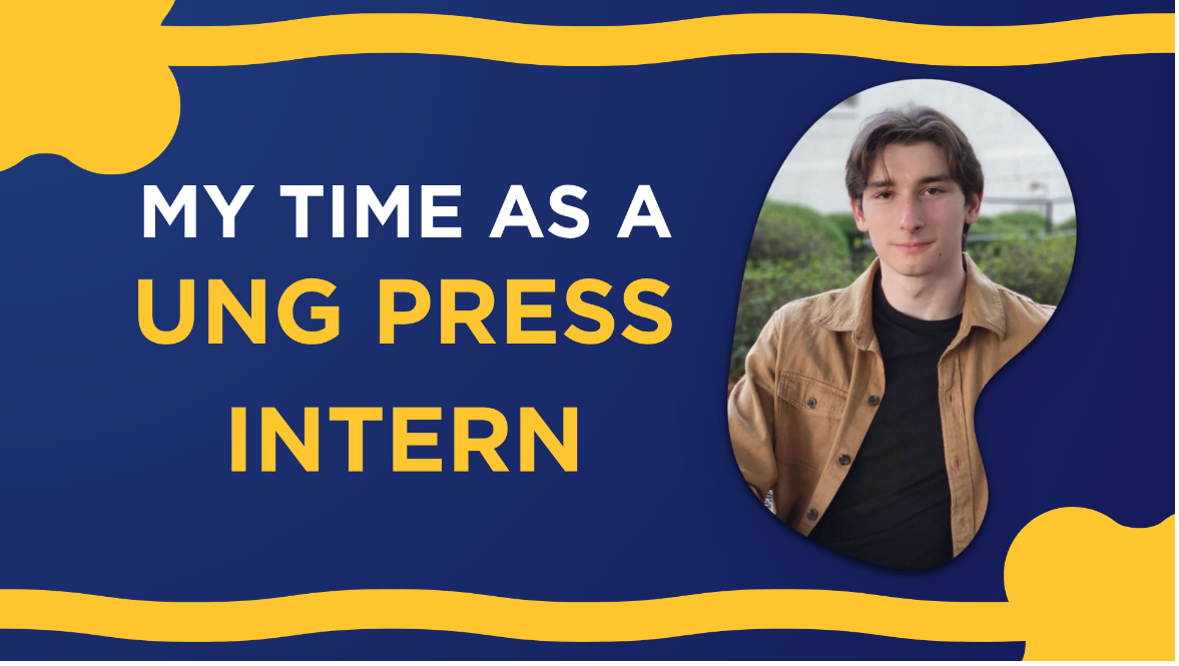
Authored by Ryan Lorenz, UNG Press Intern
It was Fall 2025 when I first learned about the UNG Press internship program. I was just finishing my Intro to Publishing class when I saw the announcement that applications were opening for the Summer 2026 cohort. As an avid reader and writer, and someone who had always been curious about what goes into publishing a book, it felt like a dream come true. That dream became reality when I got the email telling me I’d been accepted.
I’ll admit I was nervous and a little unsure of myself, but the positive experiences I’d read about from previous interns reassured me. I had a baseline understanding of what book publishing involved and some of the steps in the process, yet I was afraid I wouldn’t be able to keep up. That fear was shattered in the very first meeting. The UNG Press truly stands by its identity as a “teaching press”: I was never thrust into anything I couldn’t handle, and I was never left underprepared. There has always been a clear line of communication to make sure I was actually learning.
What surprised me most was how much is happening at once—how many moving parts and projects are all in motion at the same time. Over the course of my internship, I got to put my hands on a wide variety of them. Marketing assignments caught me off guard and quickly became some of my favorites. I’d done social media work before, but designing within a specific brand kit and set of guidelines made for a fun challenge: creating something that felt original while still aligning with the Press’s goals. From there came blog posts, which mixed research, formatting, and a thoughtful blend of conversational and professional writing to inform the blog’s dedicated readers. I even got a real introduction to developmental editing, through recommended reading and some hands-on practice, which pulled back the curtain on how a manuscript is shaped long before it’s polished.
There was one task, though, that challenged me more than the rest. Reader’s reports are an essential part of almost any entry-level publishing role: an intern or editorial assistant takes in a manuscript and evaluates its strengths, weaknesses, and overall fit with the Press’s values and catalog to help decide whether it should move forward. I have no problem being critical or doing that kind of analysis, but I hadn’t realized how much coming from a positive academic space, where the goal is always to salvage a piece of writing, had shaped the way I gave criticism. Finding the right register took a try or two: balancing harshness with hope. Through thoughtful advice from the team and a good deal of hard work, I found that balance, and I have everyone here to thank for it.
Speaking of the team, I must give them all the credit in the world. What a welcoming environment to learn in. Speaking up, asking questions, and voicing concerns has always been hard for me, but this experience showed me you should never let your nerves stop you from asking. This team is here to support you and teach you, and I can promise future interns they won’t let you down.
All that said, I can’t thank the Press enough for letting me spend my summer learning from them. I’ve honestly never felt better prepared for a future in publishing. Next up is my Fall 2026 semester, and after that I’ll have my Bachelor’s in English and I’ve never felt better about where I’m headed. Thank you, UNG Press, for your time and your pedagogy.
Leave a Reply